In the midst of rising tension with China following recent conflicts along the LAC in Arunachal Pradesh, INDIA successfully conducted a night flight test of the long-range surface-to-surface Agni-5 missile on Thursday. The successful missile test was conducted by the Strategic Forces Command (SFC), which controls the Agni-5, from APJ Abdul Kalam Island off the coast of Odisha. The Defense Research and Development organisation created the solid-fuelled, three-stage engine for the nuclear missile (DRDO). The SFC is an important tri-services formation that oversees and controls all strategic assets for the Indian Nuclear Command Authority.
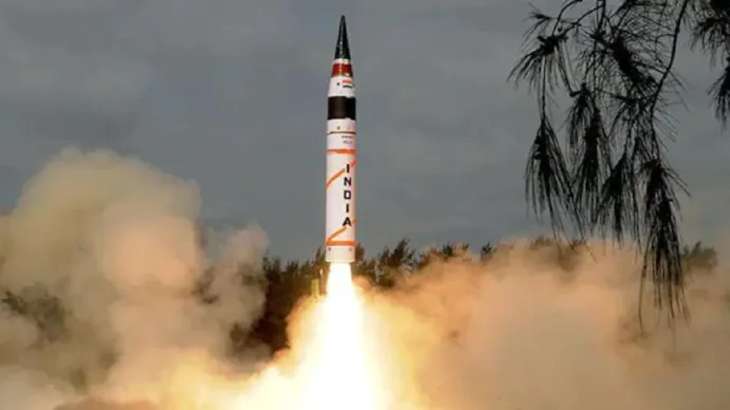
According to sources in the defence ministry, the test was conducted largely to validate a number of new technologies mounted on the missile, which can accurately strike targets at distances of roughly 5,000 to 5,500 kilometres.
Throughout the operation, including by the assets deployed in the sea, radars, range stations, and tracking systems tracked and monitored the missile's flight performance as they do for all other tests. In October 2021, the final test was also carried out at night.
Since fire is one of the five primary elements, or Panch Mahabhutas, the term Agni comes from the Sanskrit word for fire. Others are Akash (Air), Wayu (Air), Aapa (Water), and Prithvi (Earth) (Space). The DRDO's missiles have been given the names Prithvi and Akash out of these.
The doctrine's key recommendations are to create and maintain a reliable minimum deterrent. Nuclear weapons will only be deployed in reprisal to a nuclear strike on Indian territory or on Indian forces anywhere, according to the "No First Use" posture. A first attack will result in a major nuclear response that is intended to "inflict unacceptable devastation."
Agni missile development began in early 1980 under the Integrated Guided Missile Development Program, which was led by Dr. APJ Abdul Kalam, the 11th President of India and a key figure in India's missile and space programmes. The ranges of the medium to intercontinental Agni missile systems 1 to 5 range from 700 kilometres for Agni-1 to 5000 kilometres and beyond for Agni-5.
The new generation nuclear capable ballistic missile Agni P, an improved form of the Agni class of missiles, was successfully tested by the DRDO in June of last year. The range of the canisterized missile Agni P is between 1,000 and 2,000 kilometres. Agni-6 is reportedly rumoured to be in development, with a far larger range starting at 8000 kilometres and the ability to carry multiple independently targetable re-entry vehicles, though the DRDO has not publicly confirmed this.