Three months after a Chinese intelligence gathering vessel berthed at Sri Lanka's Hambantota port, the Yuan Wang VI spy ship sailed into the Indian Ocean.
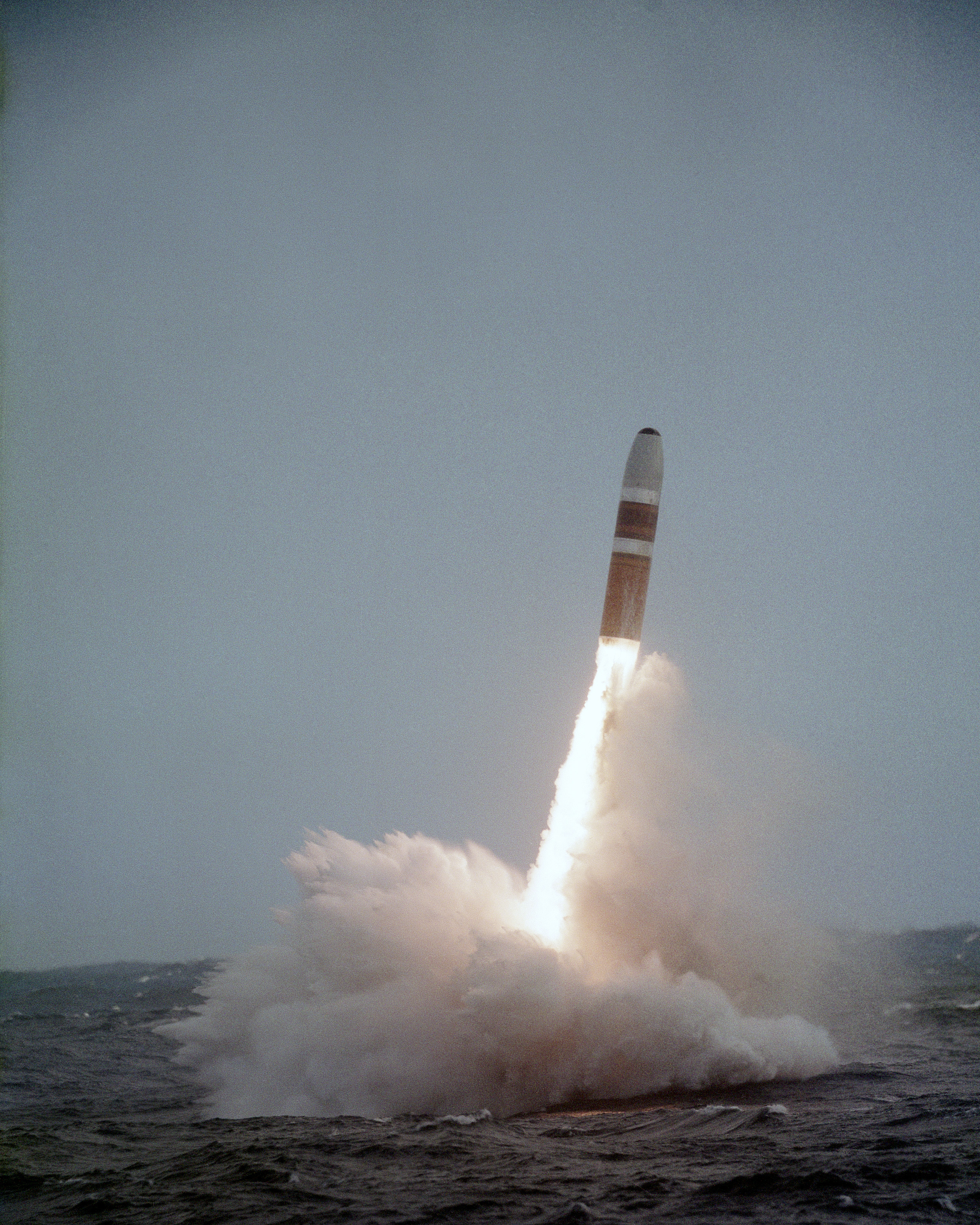 |
| K4 missile test |
Only a few days have passed since India planned its missile test before the ship makes its way into the Indian Ocean. The Chinese ship is equipped with sophisticated sensors and surveillance gear that enable it to track satellites and ballistic missiles as well as gather signal intelligence. The test will probably take place between November 10 and 11, as indicated by a NOTAM or Notice to Airmen published last month. Additionally, the notice states that the missile has a maximum range of 2,200 kilometers.
India is reportedly getting ready for its K4 missile test, while the Defense Ministry has not officially commented on the situation (SLBM). The K-4 has a 3,500-kilometer range. However, according to certain estimates, India is likely to test a ballistic missile from the Agni series during this time. The Chinese intelligence-gathering vessel's presence in the area may also cause the missile launch to be postponed.

Even though the spy ship may have been sent to the Indian Ocean for a space mission, it is highly unlikely that Beijing would pass up the chance to monitor a missile test that could put Chinese cities at risk of a nuclear attack. Beijing may have chosen to use this opportunity to focus on the space mission.
The importance of the K–4 missile test
K-12 SLBMs are currently carried by INS Arihant, the only active ballistic missile submarine (SSBN) in India. A K-12 fired from an SSBN in the Bay of Bengal has a range of only 750 km, preventing it from reaching China's industrial or population centers. However, the K-4 missile will enable India's SSBNs to strike targets in a significant portion of China, including Beijing, from the northern region of the Bay of Bengal thanks to its range of over 3,500 kilometers. The credibility of India's nuclear triad—the ability to launch a nuclear attack from land, air, and sea—will be enhanced by the addition of the K-4 missile to its SLBM arsenal.
India needed to demonstrate the ability to carry out a second strike or the capacity to counter a nuclear attack with one of its own due to its "no first use" nuclear posture. A second strike capability that is assured is a crucial component of strategic deterrence that works.
Of the three components of the nuclear triad, SSBNs are thought to be the most resilient. Taking out SSBNs at sea is significantly more challenging than taking out land-based missiles and planes designed for nuclear bomb delivery, which can also be targeted by the enemy in a first, counterforce strike. These boats have the ability to evade detection by subsisting for extended periods of time. India can undertake a retaliation strike with its remaining SSBNs in the event of a first strike that destroys nuclear weapons and land-based nuclear delivery systems. India will need a constant at-sea deterrent for this, and the completion of the three SSBNs Arighat, S4, and S4* that are now in the works would provide India with this capacity.
Where exactly is the Chinese spy ship right now?
Through the Lombok Strait, which is located between the Indonesian islands of Java and Sumatra, Yuan Wang VI sailed into the Indian Ocean. It is one of the three main chokepoints that connect the Indian Ocean to the Pacific Ocean, with the other two being the Sunda Strait and the Strait of Malacca. The Chinese espionage ship was last located in the Indian Ocean close to the Indonesian island of Bali, according to MarineTraffic, a service that tracks ship movements.
Where does the ship intend to go?
The ship will probably head for the area in the Indian Ocean that has been designated a no-fly zone for the Chinese aerospace operation. It is unclear at this time whether the ship will land at a port in the area.It won't come as a surprise, though, if Sri Lanka, which is presently experiencing an economic crisis, permits the ship to port at Hambantota for resupplies. Beijing and Colombo are now in negotiations to restructure their debt.furthermore, it is not impossible that Sri Lankan ships may be fuelling the Chinese intelligence ship at sea.
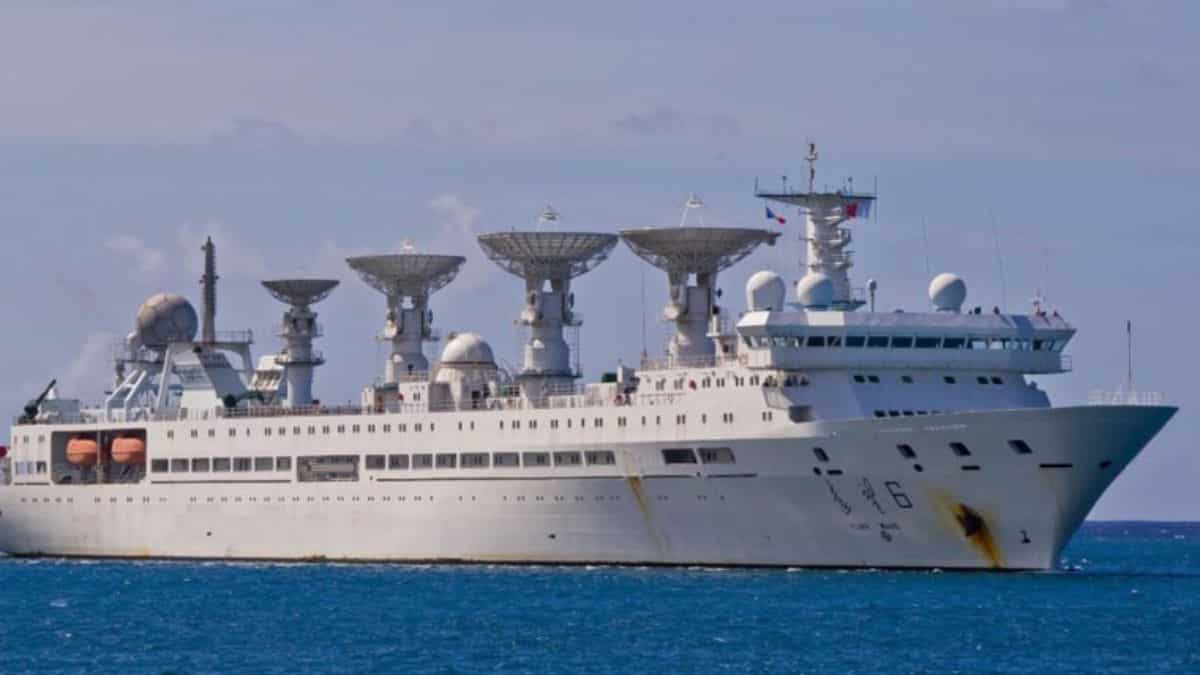 |
| Yuan Wang VI spy ship |
Reports state that in the recent past Sri Lankan vessels were seen loading fuel from the Hambantota port and refueling Chinese warships on the high seas. They go on to say that New Delhi has expressed "serious concerns to Colombo for allowing covert refueling of Chinese military vessels on the high seas". The Chinese spy ship Yuan Wang-5's arrival in Sri Lanka in August of this year had greatly alarmed India.
Stay tuned to us to receive the K4 missile test report.